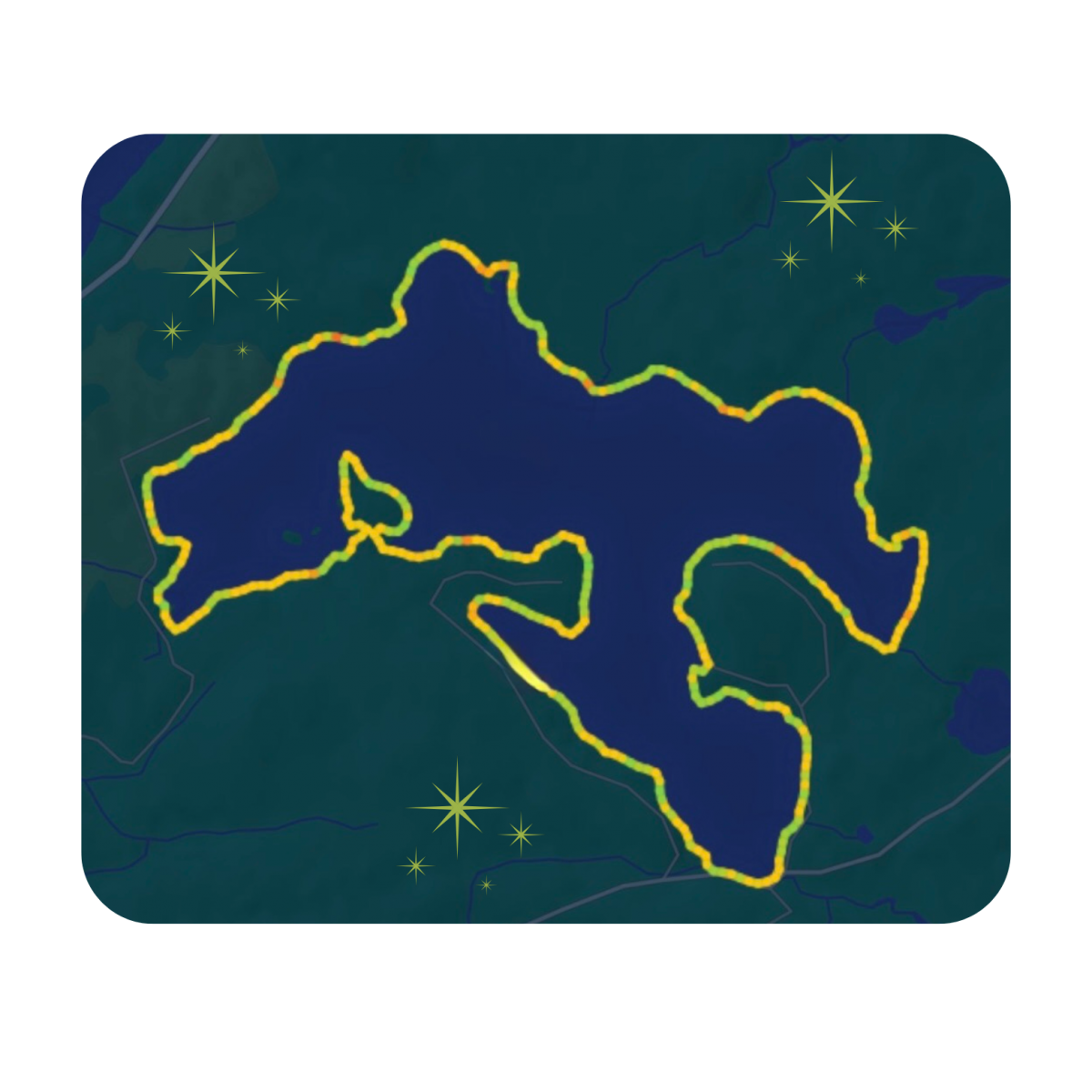
ECHO LAKE ASSOCIATION GENERAL MEETING
Saturday July 10, 2027
Saturday July 10, 2027
11:00 am to 2:00 pm
Bethune United Church
2 Dickie Street, Baysville
Phone: (705) 323-9615
Coffee/Tea/Sweets will be provided by the Bethune United Church UCW (United Church Women)
We hope to see you there!!
Bethune United Church
2 Dickie Street, Baysville
Phone: (705) 323-9615
Coffee/Tea/Sweets will be provided by the Bethune United Church UCW (United Church Women)
We hope to see you there!!
Guest Speakers:
* * * * STAY TUNED * * * *
Protecting Roadside Milkweed
A new effort by the Echo Lake Association is underway to protect roadside milkweed in the Echo Lake area, helping to support Monarch butterflies.
The initiative began with an email from the Muskoka Watershed Council, which included an article about the Rotary Club of Bracebridge’s Milkweed & Pollinator Challenge. The program encourages residents to identify and protect roadside milkweed using pollinator protection signs.
After contacting Bracebridge Rotary, the Echo Lake Association connected with Dr. Neil Hutchinson, who generously provided pollinator protection signs, helpful information and advice, as well as pollinator seed packets to help get the project underway.
With support from Ward Councillor Jacquie Godard and Township of Lake of Bays Public Works staff, the initiative was able to move forward quickly. Councillor Godard provided guidance and had already alerted Steve Peace, Director of Public Works, about the project. Both Ian MacKinnon, Supervisor of Public Works, and Steve Peace confirmed that Public Works had no concerns with the signs and that mowing crews already avoid marked milkweed patches (unless they're in a bad spot for sightlines).
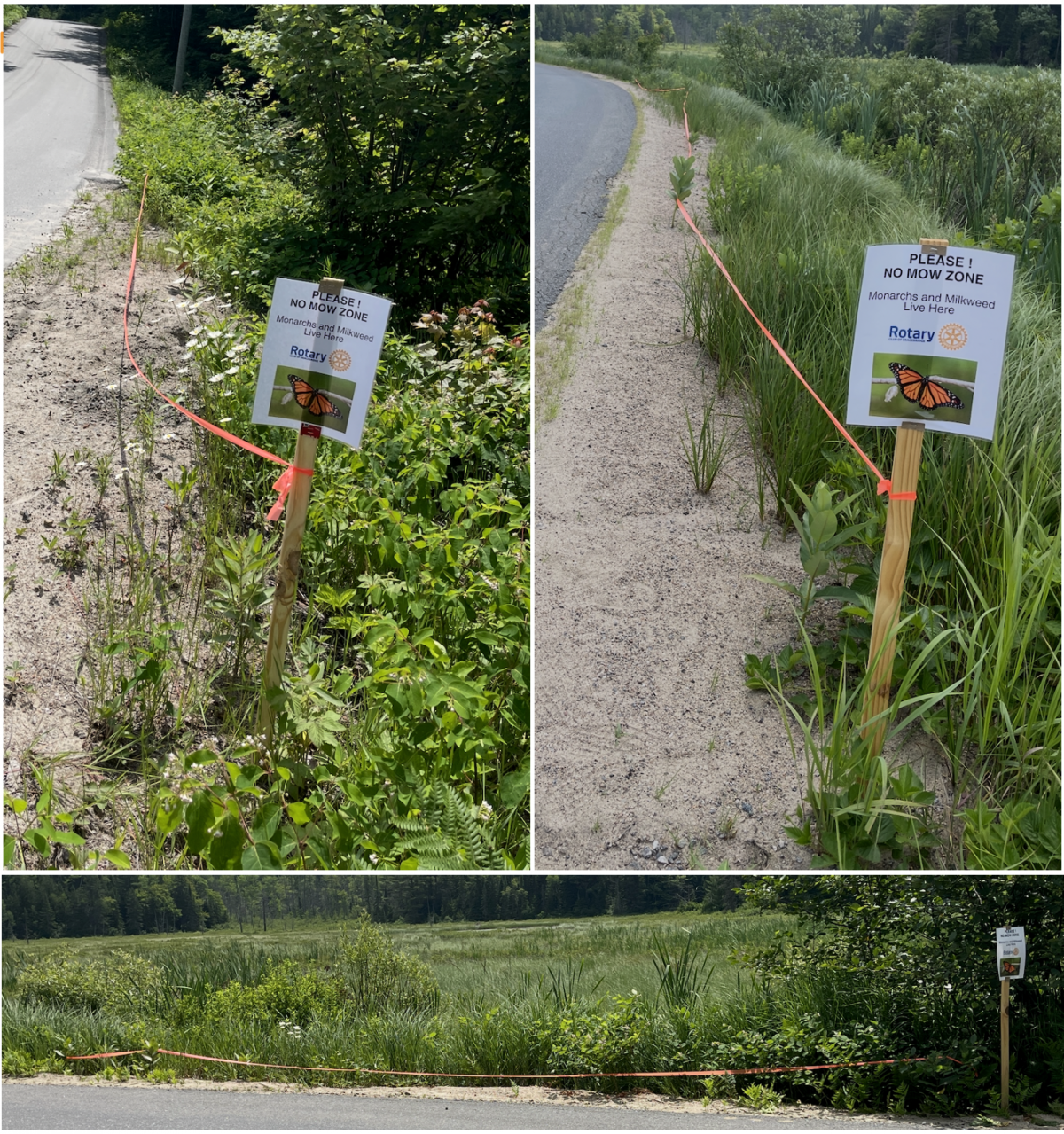
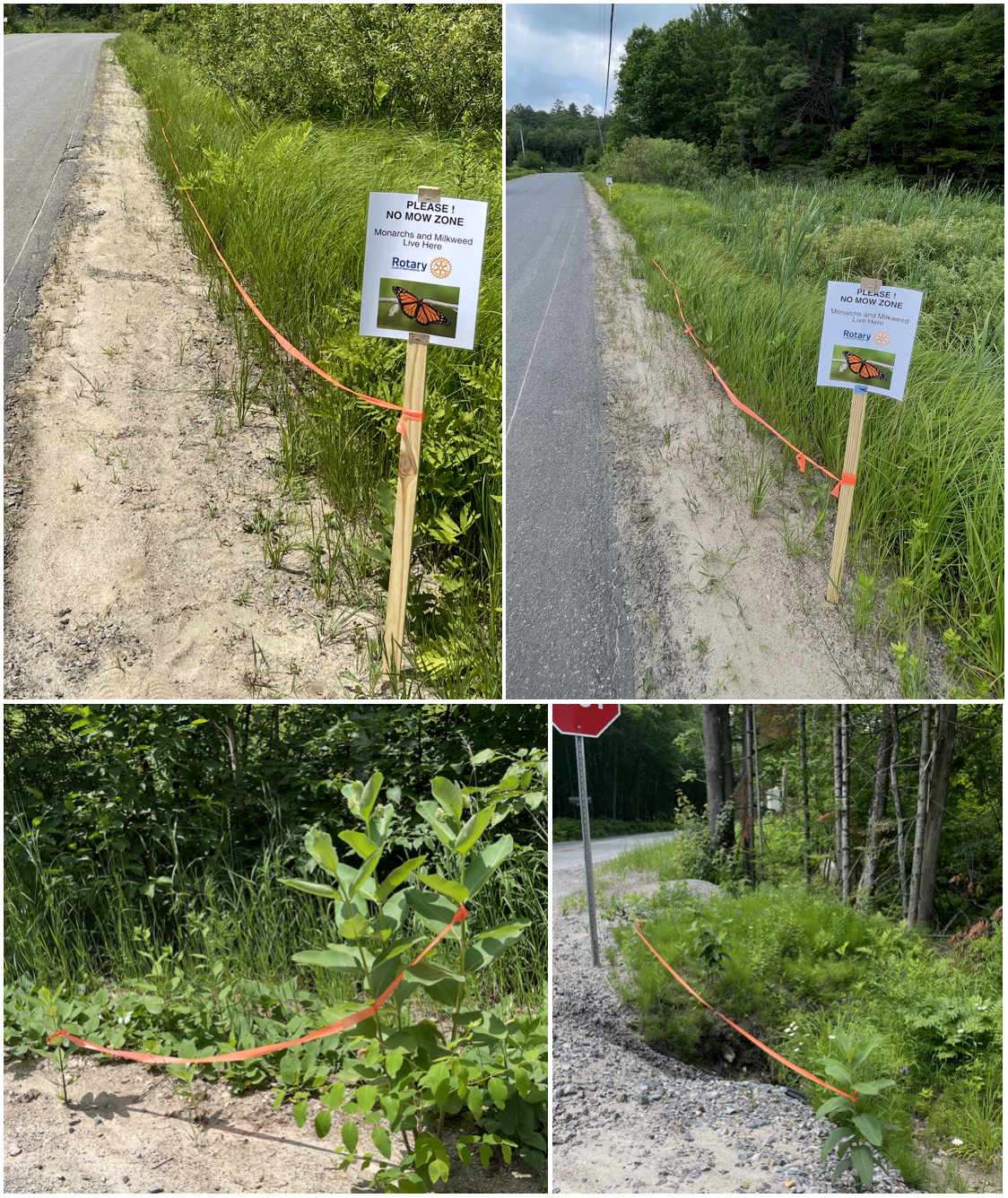
Several milkweed patches have now been marked with pollinator protection signs and/or orange flagging tape, including areas at the marsh, along South Ril Lake Road, and at the corner of Lawson Road and Echo Lake Road.
There was one early setback: Five of the seven signs installed at the marsh were stolen sometime between June 27 and June 29, 2026. Dr. Hutchinson generously offered replacement signs, and the area was re-marked with both signs and orange flagging tape.
The signs and tape will remain in place until mid-July (ish) when the adult Monarchs have flown away, and then put back up next June. While Monarchs continue to breed throughout the summer, with the final ‘super’ generation being the ones that migrate to Mexico, the Township’s mowing schedule won’t affect the later generations as they only mow ONCE (late June/early July).
The longer-term goal is to establish a continuing community initiative that can be supported by volunteers or a local organization, such as the Baysville Lions Club, and eventually expanded throughout the Township of Lake of Bays - similar to the successful program in Bracebridge.
The initial signs were provided at no charge by Dr. Hutchinson. Future costs should be modest and limited to orange flagging tape, printing, laminating and stakes. The Echo Lake Association hopes that a local organization or community partners may be able to help cover some or all of these costs as the initiative grows.
The Echo Lake Association is looking for volunteers to help. Please email us if you are interested in supporting Monarch habitat around Echo Lake. Milkweed is the only plant that Monarch larvae can eat, and so protecting the areas it grows from being cut down helps to maintain the Monarch population.
DIY MILKWEED PATCHES
Thanks to Steve Peace, Director of Public Works at the Township of Lake of Bays for this great idea! If we all set aside an area to grow our own milkweed, that takes the pressure off roadside stands. You can either purchase milkweed seeds or plants from a local nursery, get free milkweed seeds, or collect seeds from milkweed plants already nearby!
Three-Way Stop Sign Requested
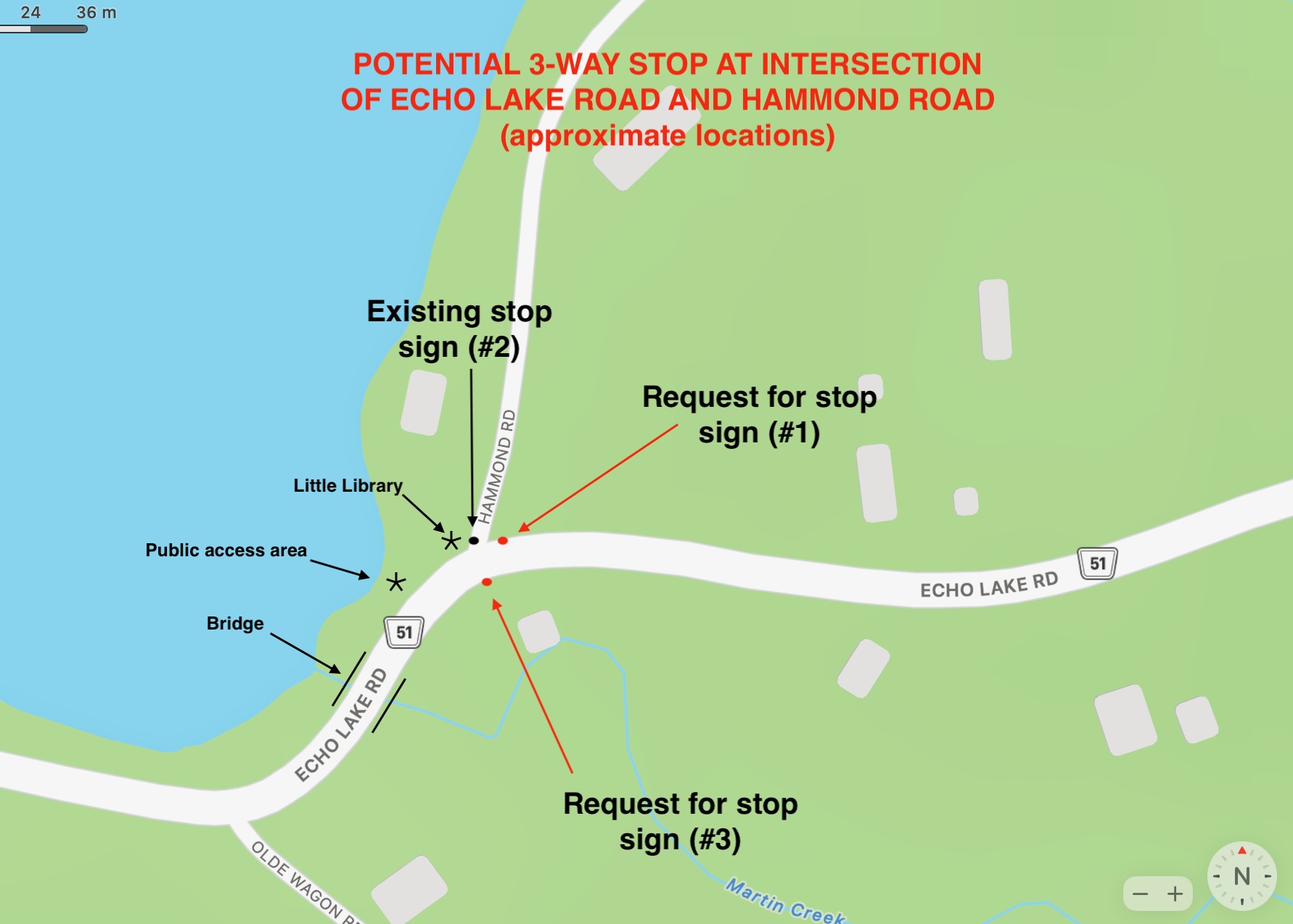
Early in 2025, Cheryl Francis and Dinesh Kishnani formed a delegation to represent the Echo Lake Association at a Lake Of Bays Township Council meeting where they officially requested a three-way stop sign at the intersection at Echo Lake Road and Hammond Road.
Councillors unanimously agreed that there was no valid reason to oppose the request and believed it would be a positive step forward. Thus, a resolution supporting the installation of the stop signs was passed and it's now with the District of Muskoka to review and make the changes.
Councillors unanimously agreed that there was no valid reason to oppose the request and believed it would be a positive step forward. Thus, a resolution supporting the installation of the stop signs was passed and it's now with the District of Muskoka to review and make the changes.
July 2026 update: The District is currently conducting a review of the intersection.
Bell Fibe Coming Our Way!
Once it's finally completed, we will enjoy faster download and upload speeds, less susceptibility to electromagnetic interference and outages, and more bandwidth. This is great news to those of us who struggle with choppy or non-existent internet service!!! 🙌
Suella Lawson Spy Communications
Small Business Consultant Third-Party Contractor - Bell Fibre Drop
Office: (705) 204-4077 Email: consent@spycommunications.ca
**** You can check which internet service is available at your address (either Whole Home Internet - our current cell-based internet service, or Fibe) HERE ****
Most of the Bell Fibe cables have now been run from the road to all the houses that have signed up with Suella and given consent to Spy Communications. It’s a shallow trench and shouldn’t impact any other pipes or lines or whatever might be there as anything else is typically buried much deeper.
WHAT YOU NEED TO DO:
1) If you haven't already done so, your first step is to contact Suella Lawson (info below). She gets a lot of emails, as you can imagine, so if you don’t hear back, she would appreciate a follow up. Once you get a hold of her, you'll need to provide verbal permission on a recorded call to allow Bell to include your address in the request for the fibre optic cable on your property.
2) Spy Communications (or Centrex in some areas) also requires consent to do the actual work. Your next step is to call 1-844-294-3177 or email consent@spycommunications.ca and give permission for the infrastructure to be placed on your property for the Fibe.
FYI:
• If Hydro is above ground from the road to your house (i.e. not buried), Bell will do the installation.
• If Hydro is buried, Spy Communications will do it (those are the coils of cable you might have noticed).
• If your lines are under water, explain that you received a 'door knocker on your dock' (email us at: elamuskoka@gmail.com for a copy).
If you have not responded to the door-knocker from Bell, or have not given permission to Spy Communications to access your property to run the fibre optic cable, and you decide to have it installed at a later date, there will be a charge to you. So you're best to do it NOW while the work is being done FOR FREE!
These steps do not commit you to service. You’ll set up your internet/tv through Suella once all the infrastructure is in place. And we'll let you know when that happens. Watch for emails and this space for updates.
⚠️ Do NOT call 310-BELL because they’ll switch you over without knowing the status of the Fibe network installations, and you’ll end up with NO internet!!
WHAT YOU NEED TO DO:
1) If you haven't already done so, your first step is to contact Suella Lawson (info below). She gets a lot of emails, as you can imagine, so if you don’t hear back, she would appreciate a follow up. Once you get a hold of her, you'll need to provide verbal permission on a recorded call to allow Bell to include your address in the request for the fibre optic cable on your property.
2) Spy Communications (or Centrex in some areas) also requires consent to do the actual work. Your next step is to call 1-844-294-3177 or email consent@spycommunications.ca and give permission for the infrastructure to be placed on your property for the Fibe.
FYI:
• If Hydro is above ground from the road to your house (i.e. not buried), Bell will do the installation.
• If Hydro is buried, Spy Communications will do it (those are the coils of cable you might have noticed).
• If your lines are under water, explain that you received a 'door knocker on your dock' (email us at: elamuskoka@gmail.com for a copy).
If you have not responded to the door-knocker from Bell, or have not given permission to Spy Communications to access your property to run the fibre optic cable, and you decide to have it installed at a later date, there will be a charge to you. So you're best to do it NOW while the work is being done FOR FREE!
These steps do not commit you to service. You’ll set up your internet/tv through Suella once all the infrastructure is in place. And we'll let you know when that happens. Watch for emails and this space for updates.
⚠️ Do NOT call 310-BELL because they’ll switch you over without knowing the status of the Fibe network installations, and you’ll end up with NO internet!!
🗞️ The Echo Lake Association will continue to follow up and will keep you posted
⛔️ And remember, do not respond to any of those robocalls from 'bell' - they're not legit!!!!
Suella Lawson Spy Communications
Small Business Consultant Third-Party Contractor - Bell Fibre Drop
Office: (705) 204-4077 Email: consent@spycommunications.ca
Two Loon Platforms
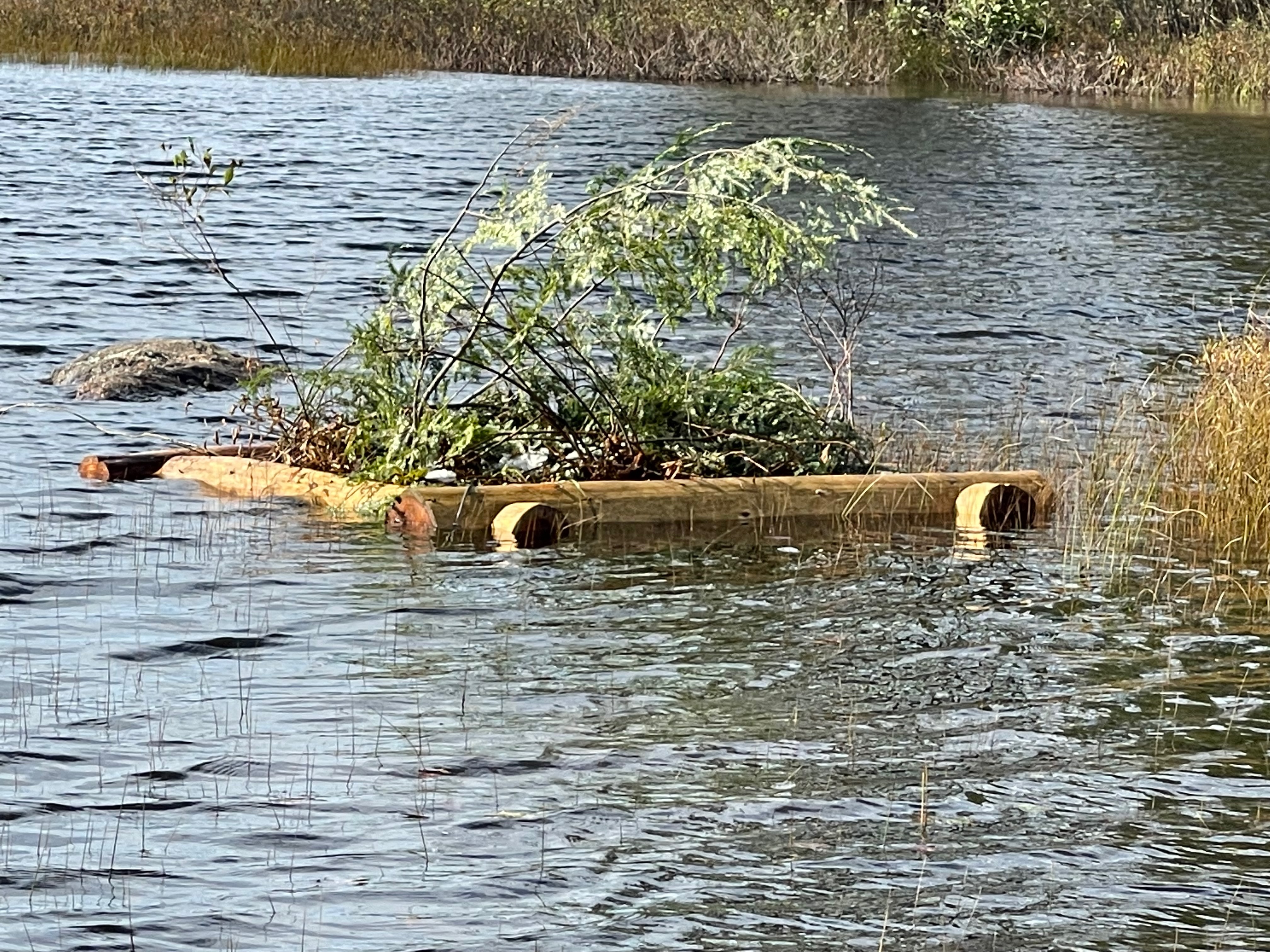
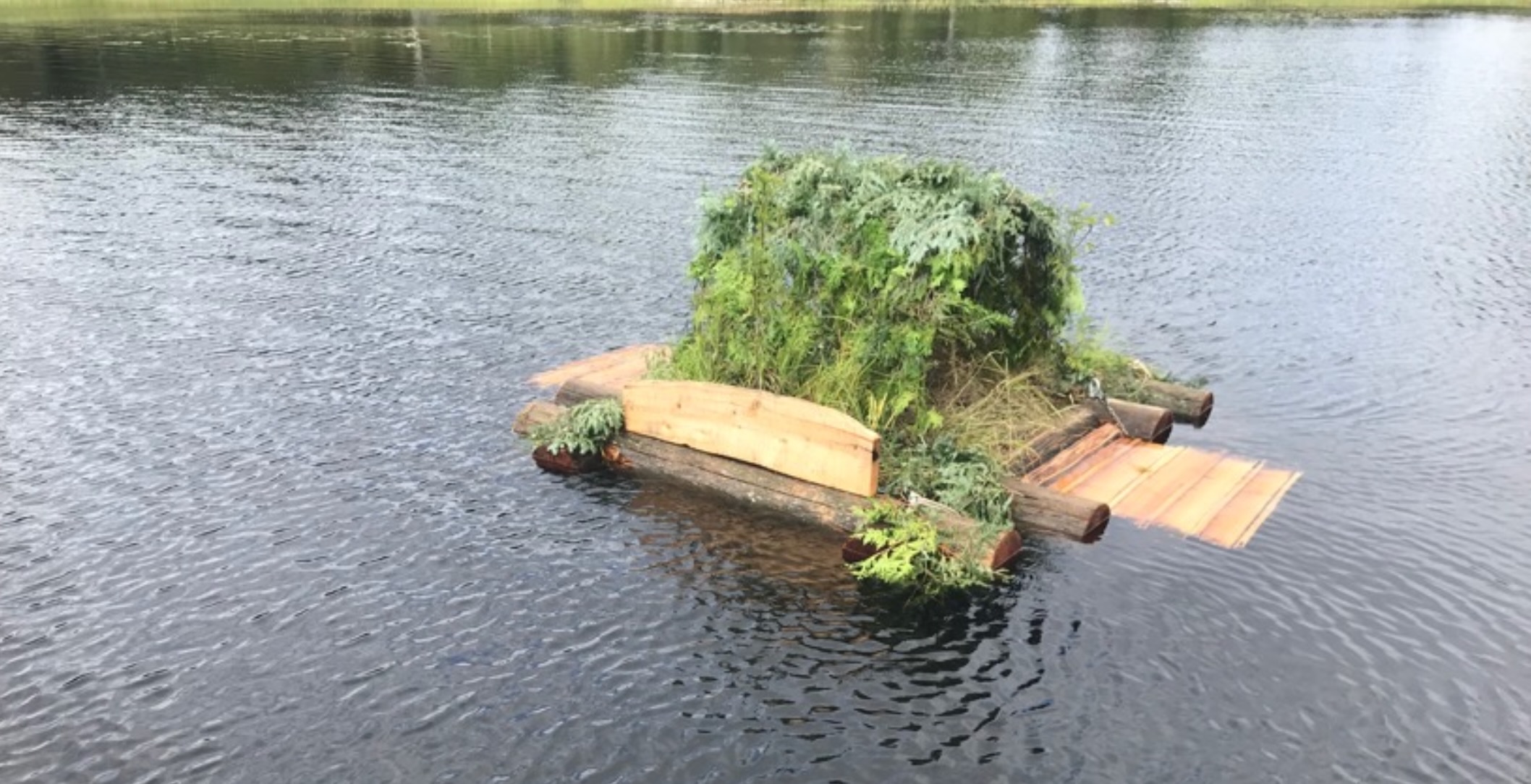
In October, 2021 our first of two loon platforms was built to try to address three years of nesting failures. A second loon platform was built the following year. *** The first platform is temporarily out of commission (waterlogged) ***
The location for each is fairly well protected from the elements and predators. But they are not well protected from human intervention, so if you come across either of these platforms, please stay well clear.
A loon pair will incubate their eggs for about 29 days. During this time, loon nests are vulnerable to natural and human-induced water level changes that flood nests or leave chicks stranded out of reach of parents.
Each platform is taken out and stored over the winter. They are also monitored and supplied with new nesting materials when needed.
One Wish
While we would much prefer to see loons nesting on natural sites, we hope no matter where they lay, that Echo Lake will see a happy, healthy mating pair raising their chick(s) to adulthood.
Special thanks to Cairn Camp, Paul Ecclestone, Cheryl Francis, Don Lawlor, Laura Murray, the Neubrand family and Rob Preisner for each of their roles in this ongoing initiative.
References:
The joy of little libraries in Lake of Bays
Echo Lake Little Library making a difference
By Wendy Truscott
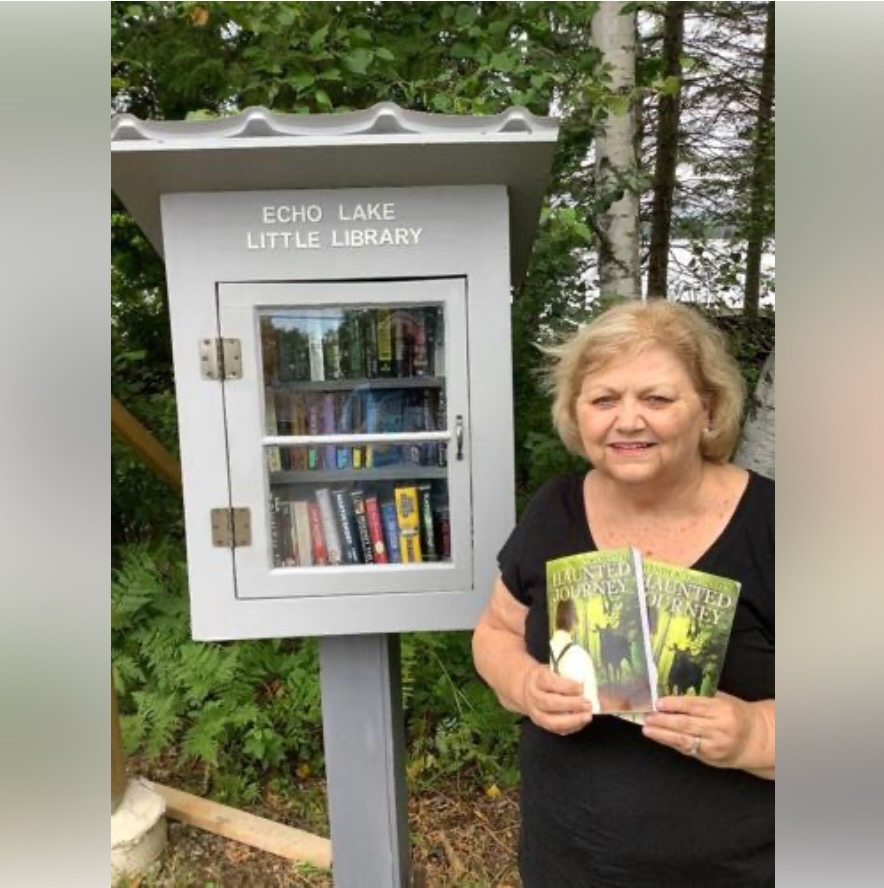
From compact bookmobiles to sprawling edifices, libraries in all their forms and sizes provide invaluable community services. In recent years, a quaint, unofficial type of library has begun cropping up in unexpected places. One of the latest of these popular pleasures can be found on Echo Lake, outside of Baysville in Lake of Bays.
While planning to replace its large visitor information sign, the lake association’s executive was also inspired to create The Echo Lake Little Library. Sincere thanks are owed to the dedicated cottagers who planned and constructed both projects, and to frequent visitor, Sarah Soberg, who volunteered her painting and design talents for the sign. Much appreciation also goes to Sunrise Tree Services, Baysville, which cleared the area, and to the Steel Tile Co. of Innisfil for donating the library’s roof tiles.
Readers are invited to take a book and/or leave one. Judging by the intriguing titles currently available, choosing won’t be easy. There is no concern about late fees, because, with one exception, no returns are required.
That one exception is "Haunted Journey," a novel I wrote. When I learned of the new little library I was delighted to donate two copies.
"Haunted Journey" is set in the Lake of Bays area, and while a work of fiction, is partially based on memories shared by older, local residents, some of whom settled and farmed on Echo Lake. For this reason, readers are requested to return these two particular copies, so that more cottagers and residents might enjoy them.
During the current pandemic, when people are unable to meet and have a chat in their beloved Baysville Library, the timely construction of the Echo Lake Little Library provides an added bonus: Neighbours can safely meet outdoors, while choosing or leaving a good book, and perhaps discuss personal recommendations. Books are some of life’s greatest pleasures, introducing us to different worlds, and often offering escape from this one. Thanks to this new little treasure, more of us can share in that joy.
By Wendy Truscott
From compact bookmobiles to sprawling edifices, libraries in all their forms and sizes provide invaluable community services. In recent years, a quaint, unofficial type of library has begun cropping up in unexpected places. One of the latest of these popular pleasures can be found on Echo Lake, outside of Baysville in Lake of Bays.
While planning to replace its large visitor information sign, the lake association’s executive was also inspired to create The Echo Lake Little Library. Sincere thanks are owed to the dedicated cottagers who planned and constructed both projects, and to frequent visitor, Sarah Soberg, who volunteered her painting and design talents for the sign. Much appreciation also goes to Sunrise Tree Services, Baysville, which cleared the area, and to the Steel Tile Co. of Innisfil for donating the library’s roof tiles.
Readers are invited to take a book and/or leave one. Judging by the intriguing titles currently available, choosing won’t be easy. There is no concern about late fees, because, with one exception, no returns are required.
That one exception is "Haunted Journey," a novel I wrote. When I learned of the new little library I was delighted to donate two copies.
"Haunted Journey" is set in the Lake of Bays area, and while a work of fiction, is partially based on memories shared by older, local residents, some of whom settled and farmed on Echo Lake. For this reason, readers are requested to return these two particular copies, so that more cottagers and residents might enjoy them.
During the current pandemic, when people are unable to meet and have a chat in their beloved Baysville Library, the timely construction of the Echo Lake Little Library provides an added bonus: Neighbours can safely meet outdoors, while choosing or leaving a good book, and perhaps discuss personal recommendations. Books are some of life’s greatest pleasures, introducing us to different worlds, and often offering escape from this one. Thanks to this new little treasure, more of us can share in that joy.
Is the future of the iconic loon in Muskoka, Parry Sound in danger?
By Andrew Hind MuskokaRegion.com
But, sadly, Echo Lake is now seeing a decline like pretty much everywhere else.
The Canadian Lakes Loon Survey (CLLS), a project of Bird Studies Canada, has been monitoring loon nesting success since 1981. While the Canadian loon population is generally stable, Muskoka loons may be vulnerable due to human activity, especially during nesting season.
Lead, a known killer of loons and other waterfowl, is ingested by loons that grind food in their gizzards using small stones from the lake bottom. Lead sinkers and shot, though banned for hunting, can cause poisoning and weaken or kill loons. While lead shot is banned, lead sinks are only banned in provincial parks.
Loons’ unique physiology makes them vulnerable to various factors. Their feet are positioned far back, hindering walking and forcing them to nest on islands or near the shore. This reliance on shoreline habitat, which has been lost due to development, makes nesting loons susceptible to water level fluctuations. A six-inch rise or fall in water during May, June, or July can flood nests or leave them inaccessible.
The following article has been edited for space and personalized for Echo Lake:
For many years, Echo Lake has been ‘punching above its weight’ as Laura Murray, a biologist and loon surveyor, stated so eloquently at our Annual General Meeting in 2024. Laura is a long-time cottager who is devoted to the well-being of our lake and we are lucky to have her expertise.
But, sadly, Echo Lake is now seeing a decline like pretty much everywhere else.
The Canadian Lakes Loon Survey (CLLS), a project of Bird Studies Canada, has been monitoring loon nesting success since 1981. While the Canadian loon population is generally stable, Muskoka loons may be vulnerable due to human activity, especially during nesting season.
Lead, a known killer of loons and other waterfowl, is ingested by loons that grind food in their gizzards using small stones from the lake bottom. Lead sinkers and shot, though banned for hunting, can cause poisoning and weaken or kill loons. While lead shot is banned, lead sinks are only banned in provincial parks.
Loons’ unique physiology makes them vulnerable to various factors. Their feet are positioned far back, hindering walking and forcing them to nest on islands or near the shore. This reliance on shoreline habitat, which has been lost due to development, makes nesting loons susceptible to water level fluctuations. A six-inch rise or fall in water during May, June, or July can flood nests or leave them inaccessible.
Cottagers and residents also impact loon populations, but positive changes are possible:
- Loons can’t avoid watercraft and powerboats, and sudden startles may separate them from their young, leaving chicks vulnerable to predators. Wakes can separate parents from young, wash away loon eggs, and disturb nests. To help, give loons a wide berth and slow down near wetlands and shorelines to minimize wakes.
- People can unknowingly harass and stress loons. Watch for signs like splashing, vocalizing, or flat-lying on the shoreline with its head down, indicating nesting. Move away if you see any of these signs to avoid separating loons from their young or exposing eggs to predators.
- Preserve your property’s wild areas by letting native wetland plants grow or replanting bare shorelines. Natural shorelines provide shelter and food for loons and their fish.
- Responsibly dispose of boat trash, including plastics, tackle, and fishing line, as it can injure loons. Keep food and waste minimal around your cottage and camp to discourage nest predators.
- Restrain pets to avoid killing chicks, startling adults, or separating them from their young.
- Reduce your environmental footprint by using less fossil fuel, avoiding pollutants, and ensuring no gas spills into water. Pump out your septic tank every couple of years.
- Join your lake association and participate in loon or lake monitoring. "Citizen scientists" are crucial in understanding loon habits and population effects.
- Grassroots efforts are key to maintaining loon populations. Cottage and lake associations can use education to encourage no wake zones, reduce pollution, and naturalize shorelines. Responsible boating and property ownership are the best ways to help loons.